Listen to this article
A few weeks ago, it dawned on me that impostor syndrome is probably dead, under the assumption that people will no longer feel the extreme anxiety of faking it till you make it, or perhaps you don’t even have to fake it if you have the skills. It wouldn’t be surprising if people struggled less if they could have a virtual assistant finding all the needed information or even teaching them about certain aspects of their work.
Will it be frowned upon? Oh, absolutely. Random people will chime in about what’s the point of X if you can’t do Y. People will always criticize you regardless of whether you use AI or not. That’s how it goes, especially if you are a person active on social media. Will those people matter at all? No. You have to ground yourself and only think of yourself and your family, if any. Everyone’s a critic with really unrealistic takes in the real world. It’s all ideal up to a point, until you realize it’s just not how it works in real life.
The way I see artificial intelligence aiding people is by enhancing the way we absorb knowledge. AI’s raw power not only lies in breaking things down in the most layman’s terms ever, but also in being able to pivot if you ask it. Yet, there are many worrisome parts about the state of artificial intelligence: it costs a literal fortune to keep it running, for now. Of course, that’s a different topic.
Circling back to impostor syndrome, I do think it will completely disappear. Why would anyone have anxiety anymore? You have a tool that you can talk to on demand. It wouldn’t make sense to feel like an impostor if you acquire the skills and knowledge. But most importantly, you wouldn’t feel the way you feel about being an impostor. The way I see it is that most people starting out, or maybe already experienced, would be in the same boat.
And yet… artificial intelligence is not a silver bullet. It can hallucinate. Quite a lot, if I do say so myself.
It doesn’t really steer my opinion that impostor syndrome will be dead, eventually. Right now, artificial intelligence is barely in diapers. There’s a lot of demand for it, but like all emerging technologies, it will take some time to get from point A to point B.
Hallucinations are a problem with AI. Sometimes you have to ask it, “Are you sure that’s right?” And it will self-evaluate its answer and either say yes or rewrite the whole solution.
However, let me be clear and sincere. If you are suffering from impostor syndrome, I completely understand it. We’ve all been there, especially in software development or any field that requires a lot of knowledge from an individual. We aren’t supposed to know EVERYTHING. There is no humane way to know everything. Even artificial intelligence will have blind spots in knowledge because it knows only as much as civilization knows. Can it ever produce new, unknown knowledge or advances in the future where it applies all its knowledge to engineering a better life? I think eventually it will… and I think it is a very scary thing once it does. It isn’t because of the whole skynet thing, but more because we will be ushered into a new era completely unknown to us. It will probably take decades to get there, as there’s no way you can advance things every year. The pace and the money sunk into it would be insane, and I am certain I won’t be alive to see it with my own eyes. You know, a real sentient artificial intelligence capable of emotions and creating its own thoughts.
Right now, artificial intelligence is a hot topic, one that might get you a lot of flak. Yet we have to be grounded and realistic in how we are seeing this new emerging technology just released to the masses. I don’t think it is going away anytime soon. And I think there’s a huge topic that society will have to bring up eventually: Universal Income.
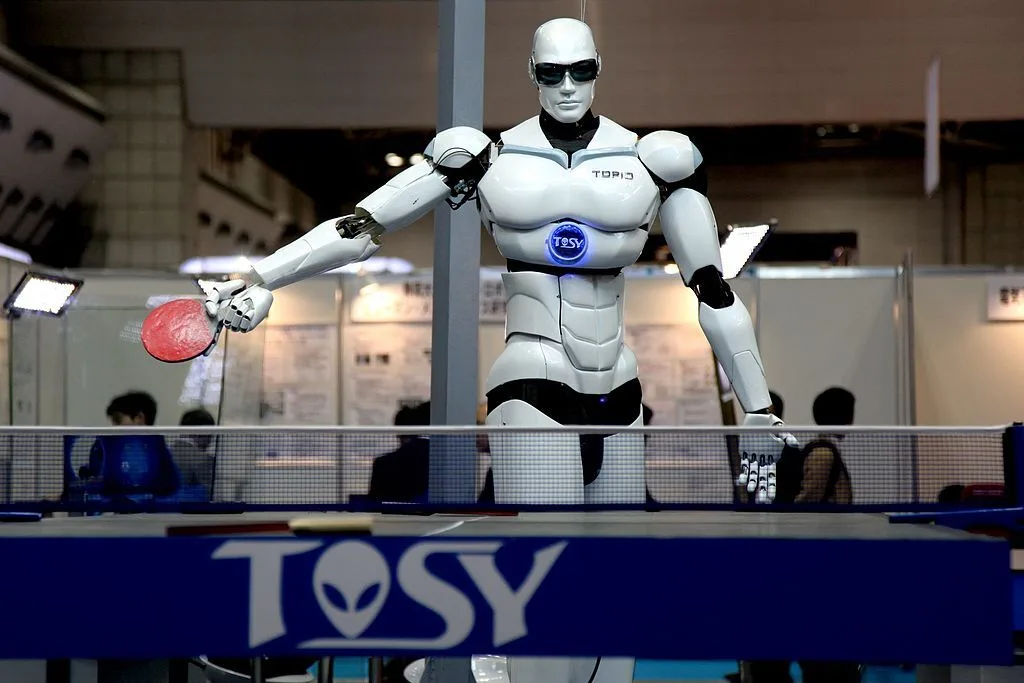
The featured image is “Artificial Intelligence” by theglobalpanorama and is licensed under CC BY-SA 2.0. To view a copy of this license, visit https://creativecommons.org/licenses/by-sa/2.0/?ref=openverse.