PLEASE READ.
Hell Is Us is rated M for Mature (17+). This review discusses themes and content that some readers may find unsettling. Although the game is fictional, it delves into religion, beliefs, psychology, and emotional themes that might not resonate well with everyone. If you have experienced difficulty of separating fiction from reality in the past—I'd advise not to play the game.
Additionally, this review may contain spoilers. I’ve made every effort to avoid revealing key plot points, but some narrative details may surface in the course of this review—especially those that are difficult to separate from the game’s thematic core. If you prefer to experience Hell Is Us without prior context, consider playing before reading further.
Rogue Factor Drops an Intriguing, Polarized World Rich in Lore and Conspiracies Like No Other
I’m not one to get swept up in a game’s lore, but Hell Is Us changed that. I stumbled onto it during CohhCarnage’s stream, and something about its world just pulled me in.
If you like games with rich lore, puzzles, and uncovering the truth behind a world while being hunted by an unknown force, you are in for a treat.
Hell Is Us opens its Act 1 with Remi Letam, an Organized Nations soldier, entering the ravaged country of Hadea to find his parents. The act opens with flashbacks Remi remembers right before his mother was caught trying to flee Hadea. As she's dragged away, her last words are: “Never come back.”
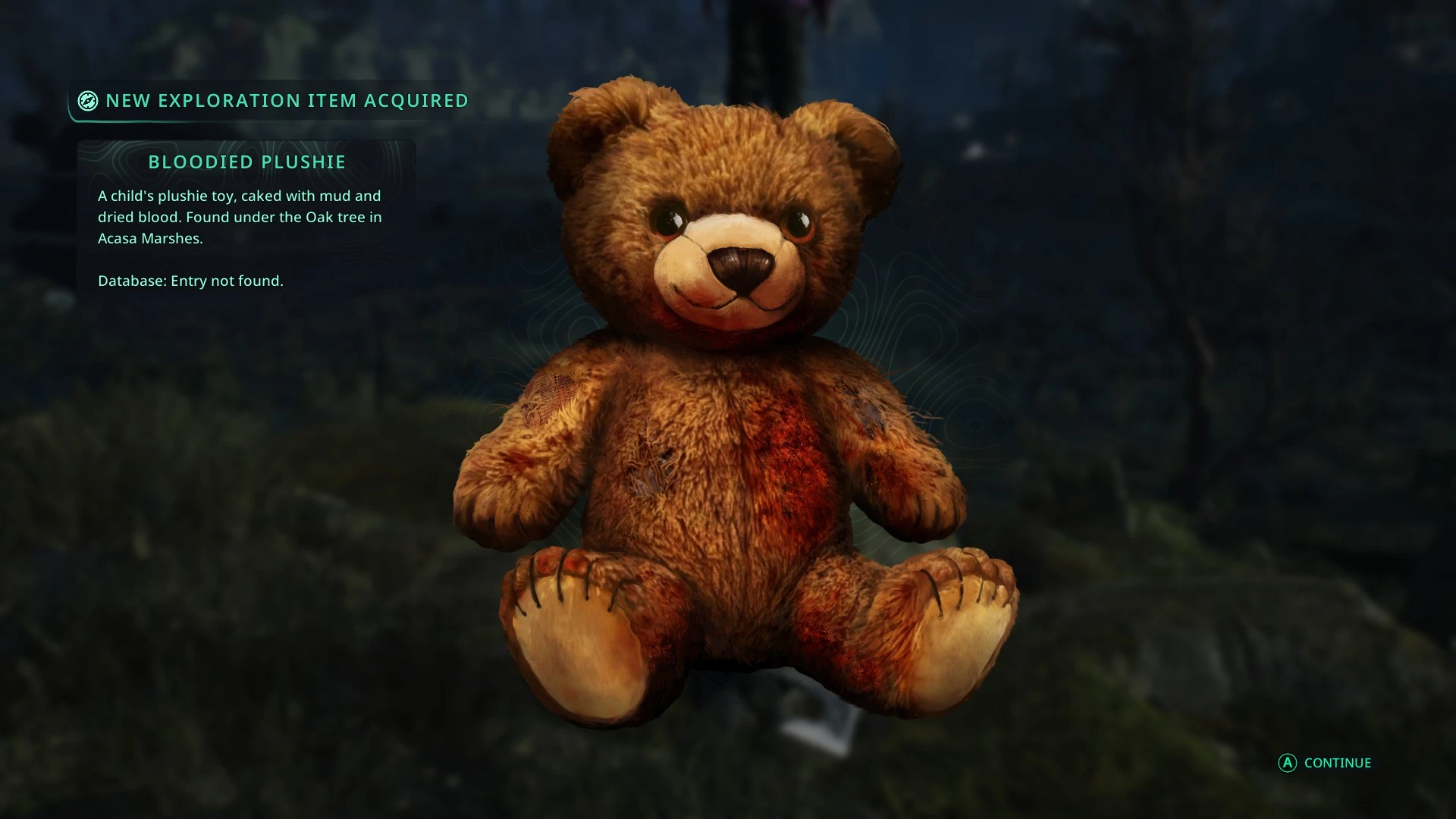
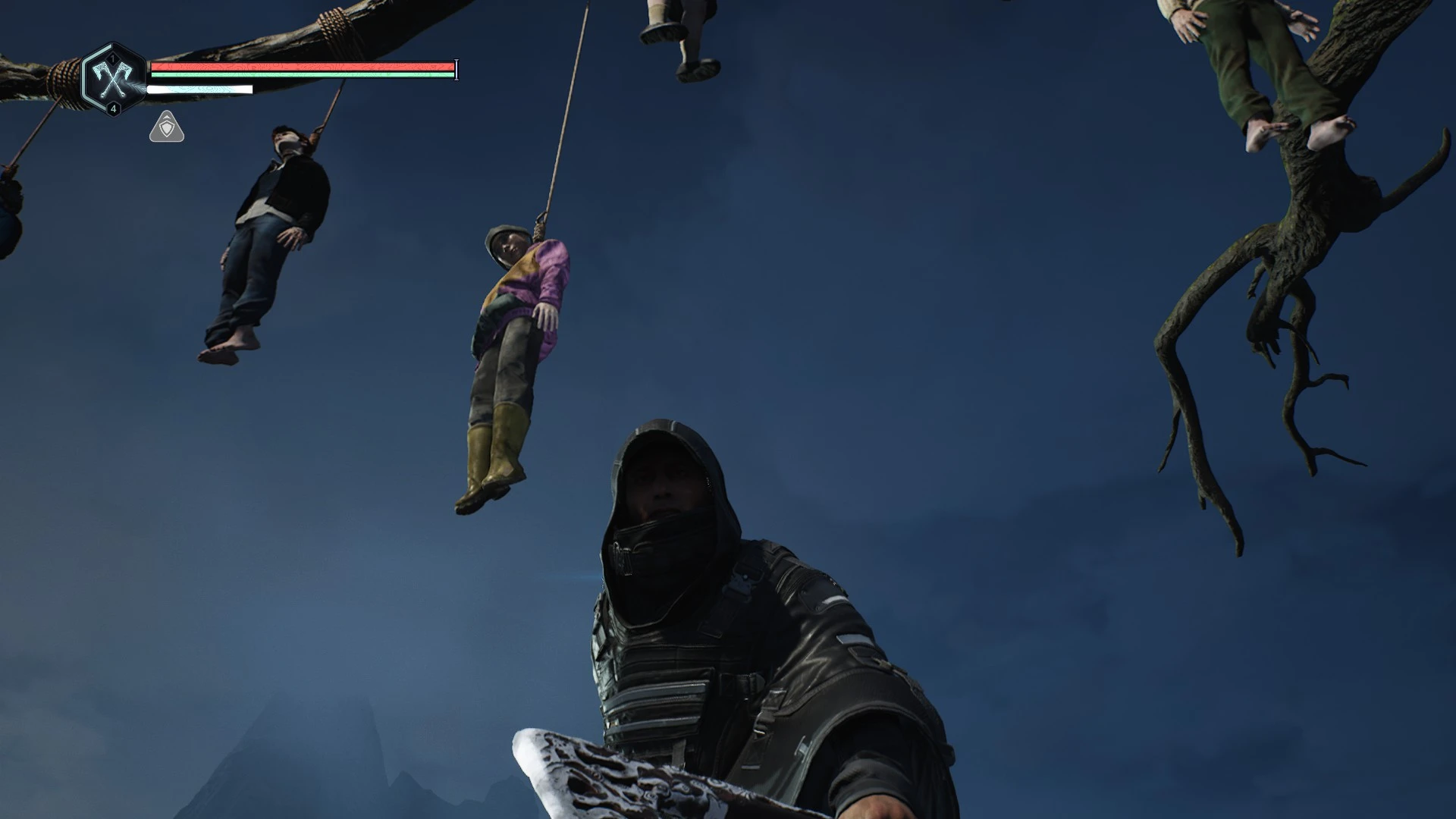
Hell Is Us holds no hostages in its descent. The player is immediately exposed to the atrocities of war.
Before we go deeper into what makes Hell Is Us live up to its name...
Gameplay & Combat
Hell Is Us is a semi-openworld game with action elements. You have the freedom to create your own loadout with skills and passive glyphs that will accompany you into the darkest corners of Hadea—quite literally. There is no attribute system to level up your character in the traditional sense; you don't pick the usual \u0022strength, vitality, intelligence.\u0022 Instead, all glyphs and gear are rewarded for solving puzzles or doing good deeds in the world.
As you arm yourself to take on these supernatural forces, there's something to be said about the combat itself.
The combat didn’t feel like the main focus, but that’s not necessarily a bad thing. I don’t see any issues it, especially since players need to revisit areas multiple times to solve puzzles, unlock chests, and doors that couldn’t be accessed initially. The back and forth you do as you get more audio tapes, letters, notes, and hints can send you touring Hadea consistently.
There are two paths to victory, all depending on the weapons, and glyphs you choose. The glyphs are divided into categories: Neutral, Grief, Terror, and Rage. During my playthrough, while I enjoyed trying out different weapons, the dual axe stood out as the perfect fit for me. However, weapon balance is an issue; some weapons parry or block faster than others. Players face trade-offs, but the dual axe doesn’t require much sacrifice—it’s both fast and deadly. To upgrade the weapons further you must choose a designated lymbic path, as in you must choose a category for it before unlocking your weapon's potential so be sure to take a good look at the glyphs you have available and decide if you want to go with: Grief, Terror, and Rage. Don't worry about missing out the possibility of using the glyphs later on. The game gives you plenty weapons over the course of your journey so rest assured that you will be able to change your playstyle.
Another issue with the weapons is the lack of incentive to use other ones. While some offer extra guarding protection, they are too slow to match the enemy's combat pace. There’s little merit in choosing a slower weapon. Sure, you can opt for a greatsword, but in situations where you’re surrounded by enemies, you’ll constantly get interrupted.
Despite my grievances, my love for Hell Is Us remains strong. I just hope that, if there’s a sequel, Rogue Factor can refine the experience. We don’t need another Souls-like game, as the market is already saturated with them. Rogue Factor strikes a nice balance in how players approach the game, and I think they should continue in that direction while keeping in mind that weapons trade-off shouldn't be so contrasted to each other if they want to provide the player different playstyles.
Let's pause for a bit
Managing your loadouts & Drone Abilities
If you miss the retro aesthetic of older games, you'll find the menu screen in Hell Is Us to be a nostalgic throwback. But my biggest complaint is the inability to sort items by recently obtained, along with the lack of clarity on how items are categorized. I often spent 10 to 20 minutes just trying to locate an item I knew held a clue for a puzzle. The menu needs serious improvement. I loved the look, but when it comes to basic usability, it falls short.
As I might have hinted above, it is not a Souls-like
The worldbuilding takes center stage in Hell Is Us
It might sound disappointing for die-hard fans of Souls & Souls-like games to learn that this game isn't brutally punishing, though you can still play on Hard.
In my view, Rogue Factor traded twitch combat for story and worldbuilding, and that trade-off works for me. Story-heavy single-player experiences are rare gems these days, especially when we’re so used to publishers like Square Enix, Ubisoft, EA, and Sony churning out massive, formulaic open-world games.
Taking risks on a new IP is always a gamble, but Rogue Factor took it.
Puzzles, rewards, religious clashes
It is wonderful to be a palomist
As mentioned before, the player is handsomely rewarded by exploring, or solving puzzles. One of the key rewards Rogue Factor created for Hell Is Us is that you can upgrade your blacksmith as you progress through the game. What this means is that you have to find the items to upgrade your blacksmith so he can provide you with more powerful tools. Finding these upgrades is somewhat critical to the game as the more you progress the harder the enemies get, unsurprisingly.
While exploring, you learn there are two main religious factions in Hadea: Palomism and Sabianism. Hadea is drenched in cultural conflict, and talking to people reveals how deeply they hate each other. Making matters worse, you eventually encounter strange white creatures tied to Teaar.
Sethyris is considered the benevolent God of Hadea, while Teaar represents their devil. But both deities—forgive me for lumping them in the same boat—come with a lot of contradictions throughout the lore. Without spoiling too much, there is far more to Teaar and Sethyris than simple divine myth.

Screenshots


Worldbuilding is...
My favorite part of Hell Is Us
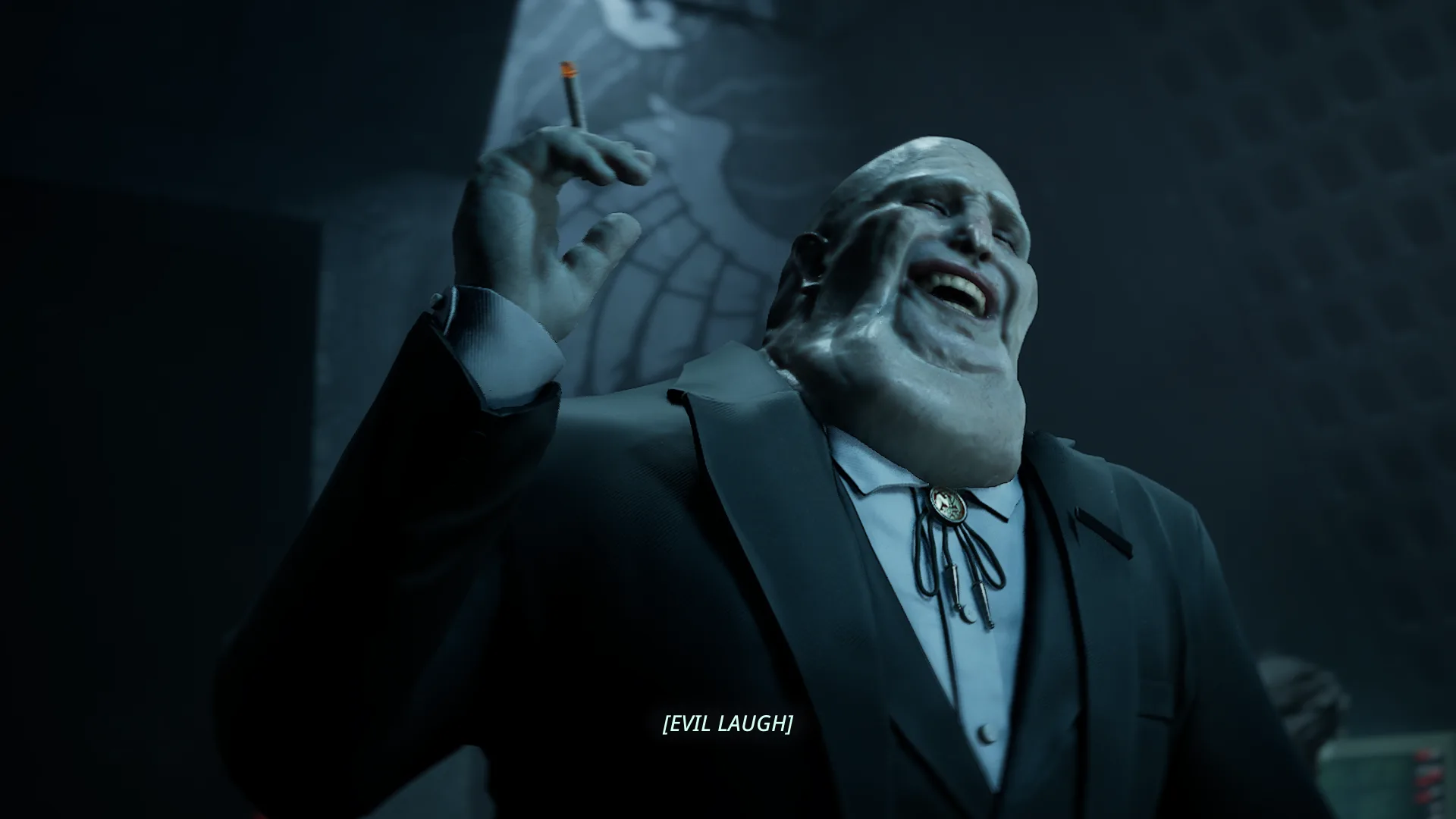
If having supernatural entities terrorizing all the regions in Hadea you uncover an enigmatic force called "Ziel Council". Little is known about their involvement and why they are in Hadea. The player will from time to time see several cutscenes from a grotesque looking man talking to Remi.
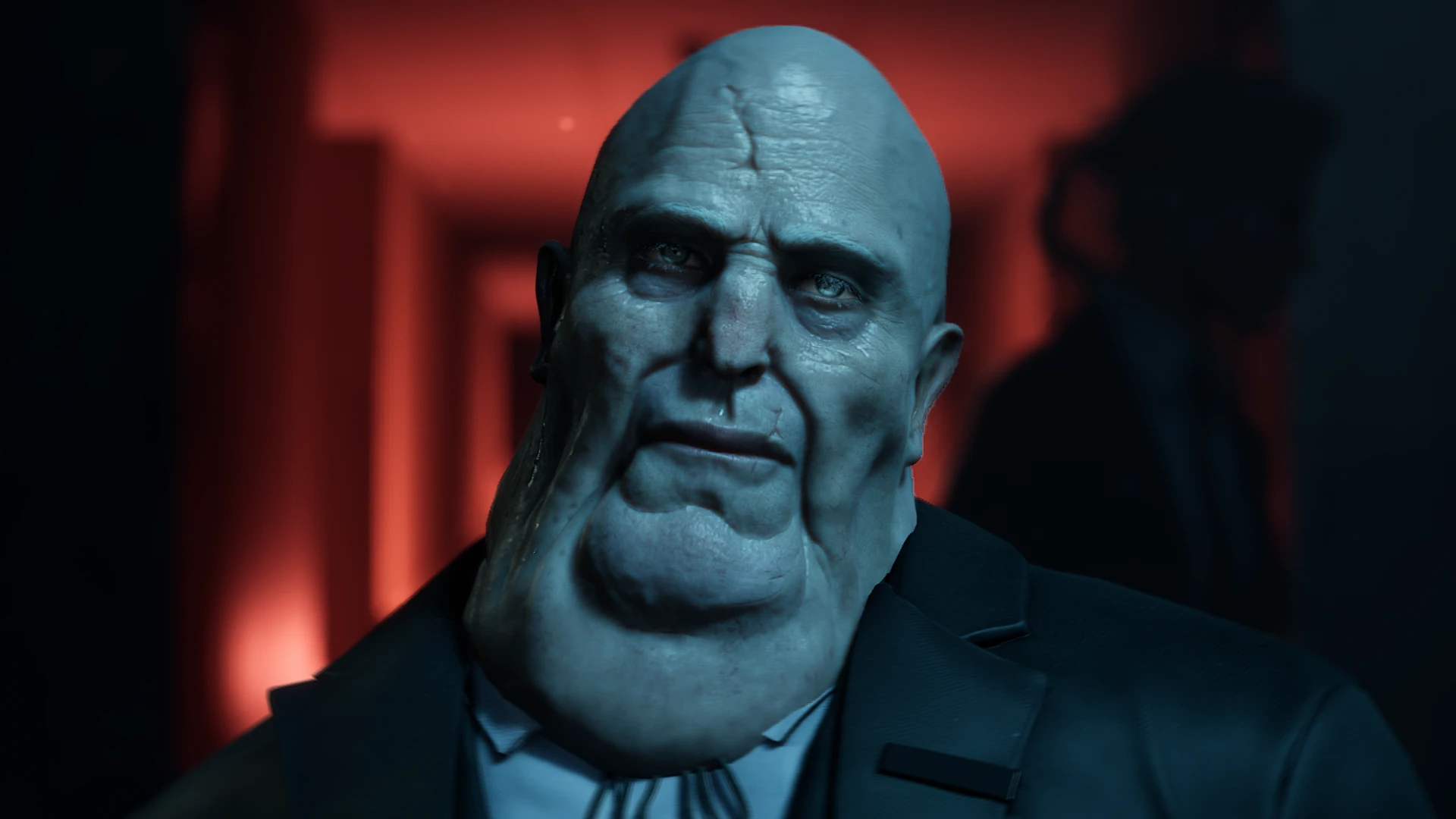
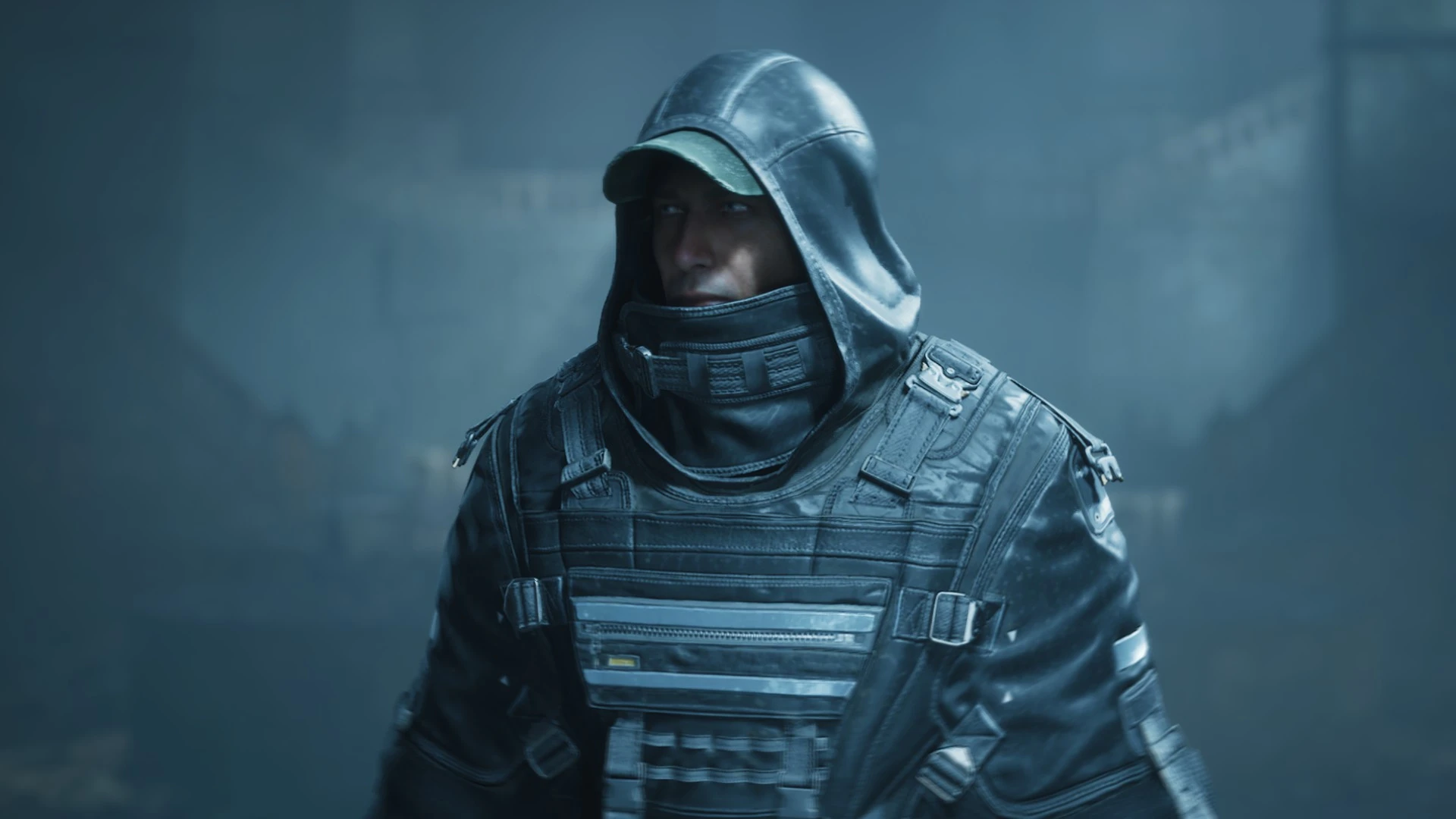
Along with the Ziel Council, you encounter other factions—most notably the media, which plays a massive hand in this war.
The War Within
I'll be talking more about this extensively to avoid spoilers. One of the central themes in Hell Is Us is media manipulation. A constant barrage of state propaganda and outrage fuels violence across Hadea, preying on citizens who are too emotionally overwhelmed to realize they’re being played.
Raw emotion is the fuel that keeps the war burning.
At first glance, Hell Is Us might seem confusing to players. The relentless atrocities, genocide, pillaging, and sheer cruelty appear almost unstoppable, as if deliberately designed to be that way. Beyond its fictional setting, the game mirrors many themes from our current political climate. While not a direct 1:1 comparison, the Palomists and Sabianist Reformists view each other as the ultimate evil, unable to agree on anything. As you uncover their history, you'll realize how much of an understatement this is, given the horrific actions both parties have taken.
From what I’ve gathered, the Sabianists seem to be the victims of this crusade. Their desire for less restrictive religion through a reform led to unimaginable injustices, ultimately sparking a thousand-year war.
The challenge lies in understanding how it all started. Rogue Factor intentionally scattered fragments of information across Hadea, creating perceived "plot holes" that make the narrative feel disjointed. These gaps are designed to provoke thought, though there are genuine inconsistencies, particularly around what drives Remi Letam, a known sociopath, to continue his journey. For Hadea? For what? A promise? What significance would a promise hold for someone like him?
The protagonist’s motives are questionable, given his background. By the time I finished the game, I felt it was just the beginning of an amazing journey.
As the game nears its conclusion, collecting the final audio tapes reveals a possible reason for Remi Letam’s behavior—perhaps he was exposed to something that altered him. This purely speculative, but if true, it raises questions about everyone born during that time.
Conclusion
In a year where taking creative risks in the games industry usually gets studios shut down, Rogue Factor took a real swing with Hell Is Us. It's a dream for players who love true exploration: no hand-holding, no mini-maps, no quest markers—nothing. It is completely up to you to explore and piece the truth together.
Unfortunately, Hell Is Us was heavily overshadowed by the launch of Hollow Knight: Silksong. I can only hope word-of-mouth builds around this game—knock on wood—so more people get to experience the same thrill I had exploring Hadea.
If you’re interested in reading further, feel free to continue. However, I’ll be diving deep into what made me fall in love with this game, which will inevitably unleash a flurry of spoilers.
Hell Is Us is available for PlayStation 5, Xbox Series X, and PC.